

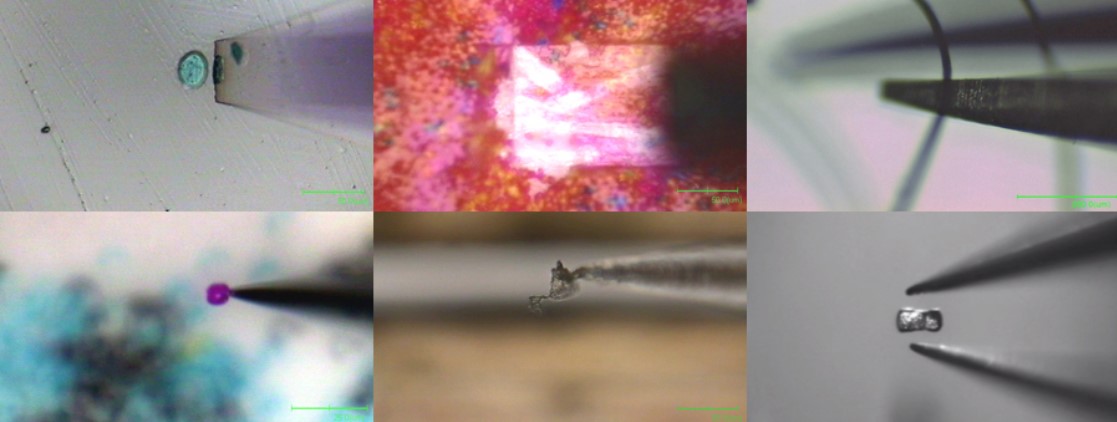
Feature 1: The Importance of Bending a Tungsten Probe: Approach Angle
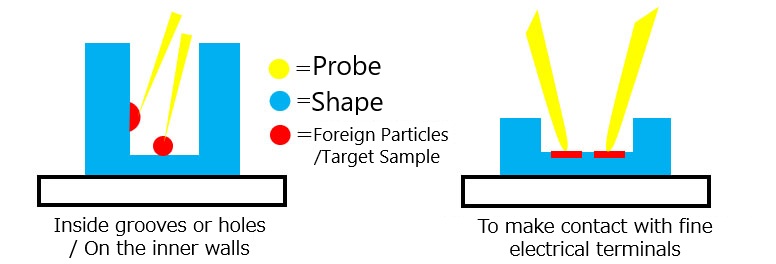
Normally, when a probe is used with a manipulator, the arm angle is the same as the approach angle. However, in some cases, a steeper angle is required.
When an Additional Probe Angle Is Required
・To access foreign particles inside microscopic grooves or holes, including those adhered to the inner walls (e.g., foreign particle sampling)
・To bring the probe tip into contact with the sample as precisely as possible (e.g., probing)
Jig for Bending Tungsten Probes
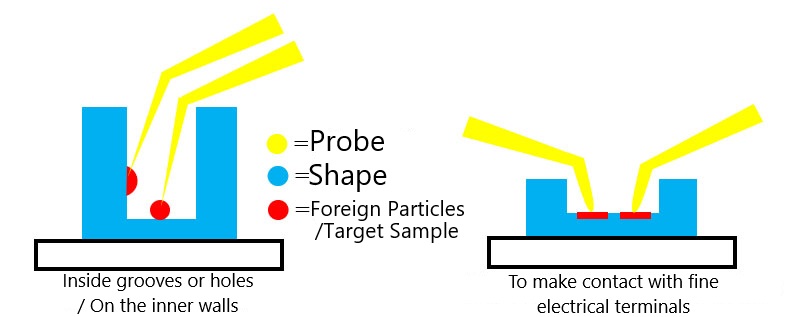
As mentioned above, when the microscope’s working distance limits the approach angle, one solution for accessing the target at a steeper angle is to physically bend the probe tip.
As shown below, bending the probe tip creates a steeper tip approach angle while keeping the probe handle angle unchanged.
<Example of Probe Tip Bending>
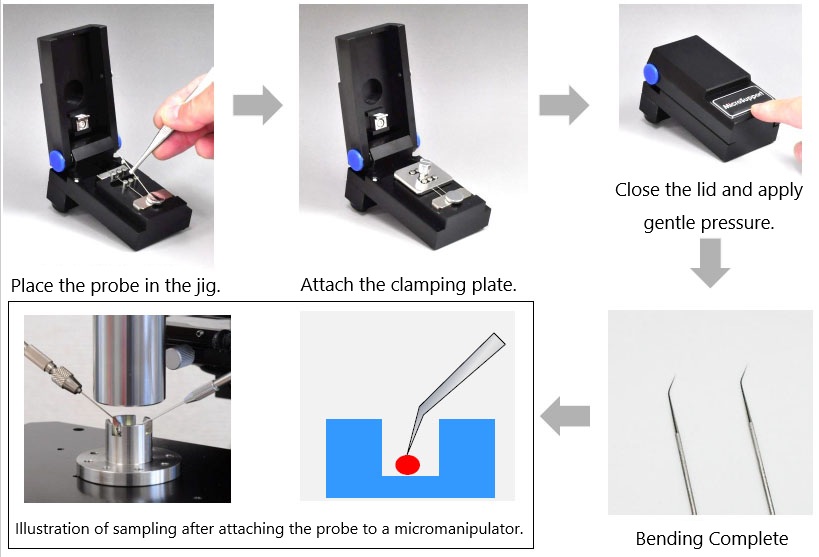
Although the probe tip can be bent manually using tweezers or similar tools, handling a sharp probe by hand is not recommended from an occupational safety standpoint. In addition, accurately controlling the bending angle is difficult.
To address these challenges, we offer a dedicated jig specifically designed for bending tungsten probe tips, as shown below.
*Note: This jig is designed exclusively for use with MicroSupport tungsten probes (excluding models with a 0.2 μm tip diameter).
Check Product Page : Probe Bender(PB-1)
Micro-pipette with an Angled Tip
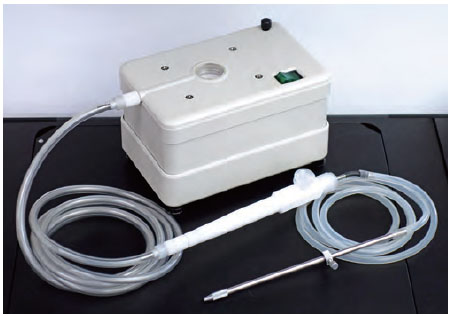
For foreign particle pickup using the Vacuum Tweezers Tool Set, we also offer a glass micro-pipette with a pre-angled cut tip.
Please see the product lineup below. For other options, please feel free to contact us.
Check Product Page : glass-tool
[Compatible Accessories to Micro-Pipettes]
Check Product Page : VP-SET2
Feature 2: How to Use the High-Precision Rotator
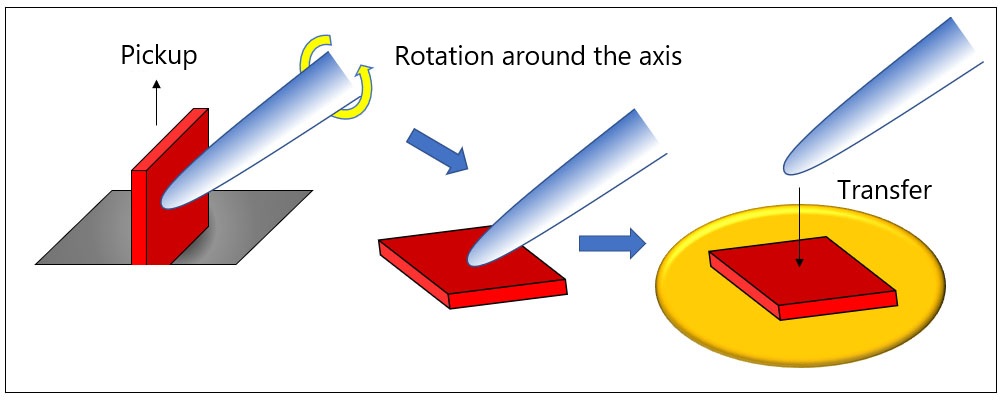
In this issue of our “How to Use Accessories” series, we introduce the High-Precision Rotator, which allows users to freely adjust the orientation of a picked-up sample with a manipulator under a microscope.
<Introduction>
This product is used when precise orientation control of a picked-up sample is required under a microscope. It is ideal for applications where the sample orientation must be adjusted before transfer or observation.
The motorized model is particularly convenient because its rotation angle can be controlled remotely via software.
<Mechanism of Sample Orientation Control>
*Example: TEM Lamella
Check Product Page : HPR-2
Operating Enviroment
Both the manual and motorized models are designed to be used with a manipulator. Please contact us for further information.